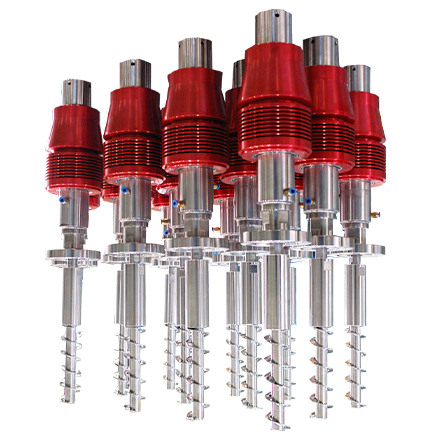
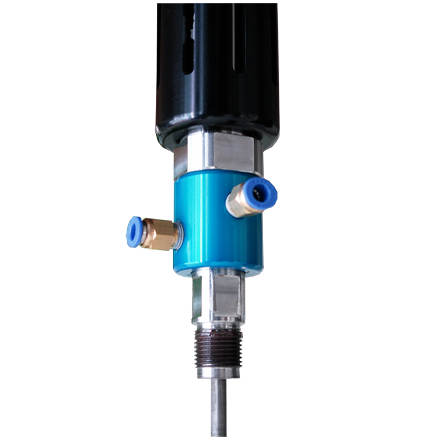
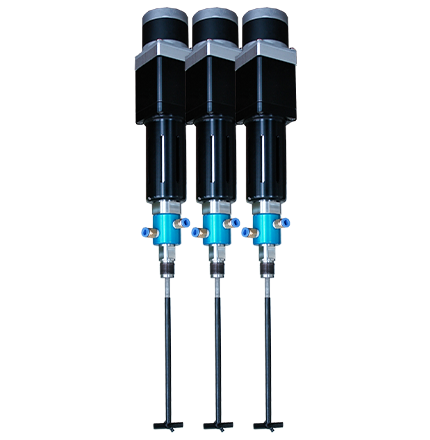
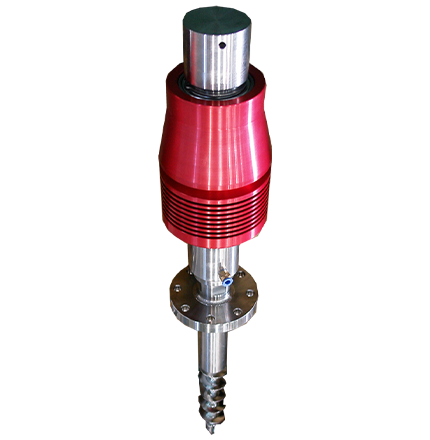
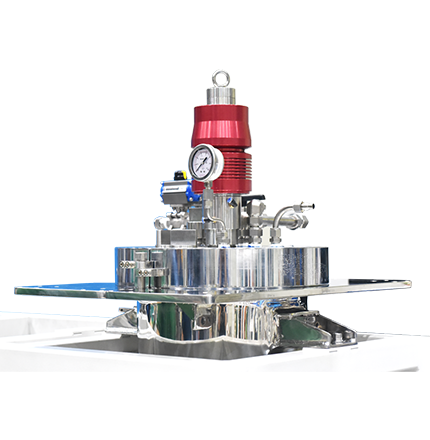
The Magnedrive is a magnetic stirrer featuring high-strength Neodymium (Nd) magnets, engineered for high-speed rotation even within the high-temperature and high-pressure environments of tanks, vessels, and reactors.
Its advanced design enables the stable and efficient mixing, diffusion, and dispersion of gases, liquids, and high-viscosity samples. By utilizing magnetic coupling, it ensures a hermetic seal and reliable performance for various demanding chemical processes.

Applicable for high-temperature and
high-pressure conditions up to 330℃.

Capable of high-speed rotation under extreme
high-temperature and high-pressure conditions.
The MDA Series features a direct-coupling design that connects the shaft and motor. It is engineered to operate under high-temperature and high-pressure conditions and is suitable for the mixing, diffusion, and dispersion of a wide range of samples, from low to high viscosity.
The MDB Series operates by rotating the shaft through a direct belt connection between the motor and the Magnedrive housing. Capable of operating in high-temperature and high-pressure environments, it is applied to the mixing, diffusion, and dispersion of various samples across the entire viscosity spectrum (low to high viscosity).
Its simple structure ensures easy installation and operation. With minimal noise, vibration, and dust, it is ideal for maintaining a clean workspace and facilitating high-precision processes. Furthermore, it allows for a wide range of torque and stirring speed settings, ensuring stable operation through consistent and accurate power transmission.
Available in various models and specifications, it can be applied to a broad spectrum of samples, from low to high viscosity. It delivers reliable stirring performance even under demanding high-temperature and high-pressure conditions.
Built with excellent corrosion resistance and durability, it supports long-term continuous operation and remains stable in high-temperature environments up to 330°C. Additionally, an integrated Cooling Jacket enhances cooling efficiency and prevents performance degradation.
| Series | Pressure | Shaft Dia | Capacity | Max. Temp. | Connection Method |
|---|---|---|---|---|---|
| MDA 100 - 10 THI | 300 bar | Ф10, Ф12 | 1 ~ 5ℓ | 300 ℃ (Using Cooling Jacket) |
Thread Type |
| MDA 100 - 20 THS | Ф20 | Review required for capacities of 5L or more | |||
| MDA 100 - 30 THH | Ф30 | ||||
| MDB 100 - 10 THL | 300 bar | Ф10, Ф12 | 1 ~ 5ℓ | 300 ℃ | Thread Type |
| MDB 100 - 20 THS | Ф20 | Review required for capacities of 5L or more | |||
| MDB 100 - 30 THH | Ф20 | ||||
| MDB 100 - 10 FLL | 300 bar | Ф10, Ф12 | 1 ~ 5ℓ | 300 ℃ | Flange Type |
| MDB 100 - 20 FLS | Ф20 | Review required for capacities of 5L or more | |||
| MDB 100 - 30 FLH | Ф30 |
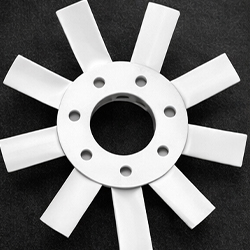
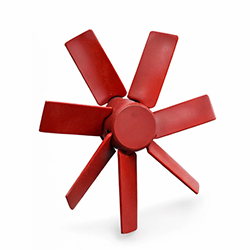
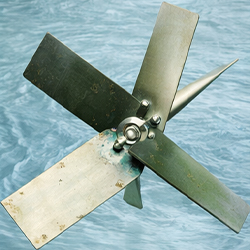
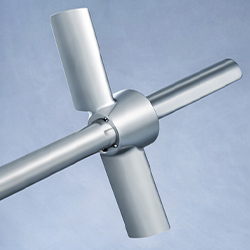
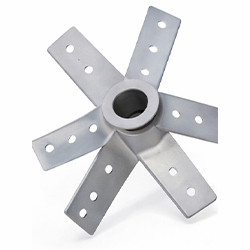
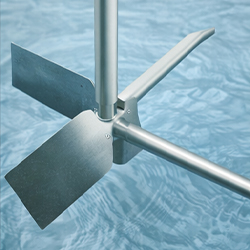
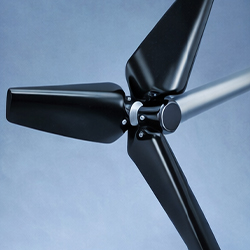
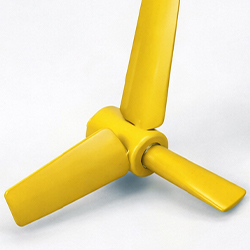
The Impeller is a critical component of any stirring system. Since mixing efficiency is heavily influenced by the impeller’s geometry and the flow characteristics of the target materials (liquids, solids, or powders), selecting the appropriate shape is essential.
Ilshin Autoclave designs and manufactures a diverse range of impellers, allowing customers to select the optimal design tailored to their specific process conditions and objectives. Beyond the impeller itself, we provide comprehensive engineering and manufacturing services that cover all factors affecting stirring performance—including the geometry of tanks, vessels, and reactors, as well as heat transfer structures and baffles. By conducting thorough technical reviews of process parameters such as material selection, size, pressure, temperature, and load, we deliver optimized solutions for every application.
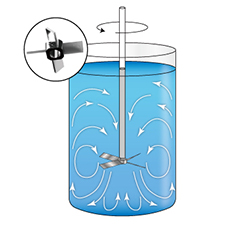
Creates an ideal flow pattern with high stirring efficiency by forming a combined flow of radial and axial currents.
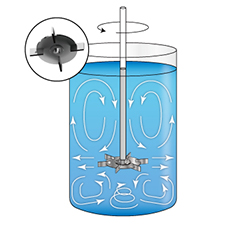
Forms a flow pattern primarily consisting of radial flow, making it suitable for powerful and intensive stirring.
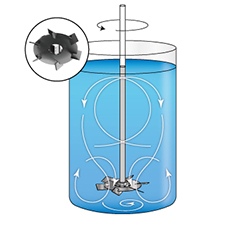
The combination of radial and axial flows creates complex turbulence, while the blades simultaneously deliver powerful power and shear force to the liquid.

The combination of radial and axial flows creates complex turbulence, while the blades simultaneously deliver powerful power and shear force to the liquid.
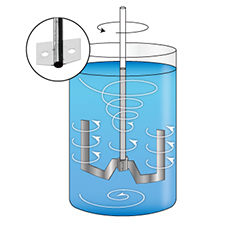
Features a large-diameter structure that rotates close to the reactor walls to induce localized kneading. It is ideal for high-viscosity mixing, heat transfer, dissolving high-concentration powders, and mixing plastic fluids such as Bingham fluids.
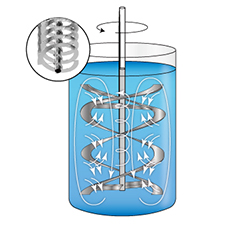
The inner screw scrapes the liquid upward while the outer ribbon pushes it downward, creating powerful vertical circulation currents.
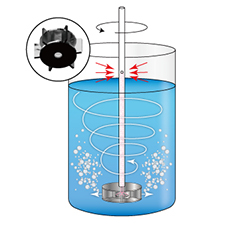
A specialized impeller designed to perform gas bubbling and fluid agitation simultaneously.
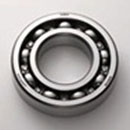
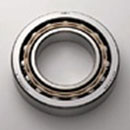
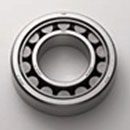
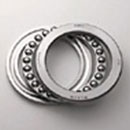
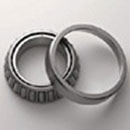
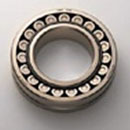
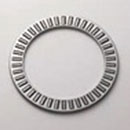
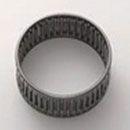
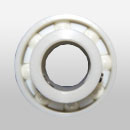
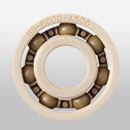
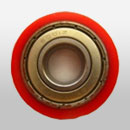
A Bearing is a mechanical element designed to support a rotating or reciprocating shaft in a fixed position, sustaining the applied loads while minimizing friction to ensure smooth and stable movement.
By reducing frictional losses and improving operational efficiency, bearings maintain precise component positioning and prevent deformation caused by frictional heat, thereby enhancing the reliability and lifespan of the equipment. Bearings are classified into various types based on their operating environment and structure; according to the contact method, they are divided into Plain Bearings (Sliding) and Rolling Bearings. In terms of materials, while metallic bearings are the standard, Ceramic or Plastic bearings are applied under specialized operating conditions.
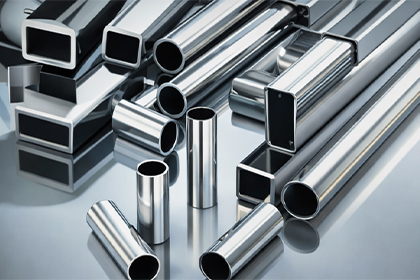
Stainless steel is a corrosion-resistant alloy containing at least 12 wt% Chromium (Cr). It forms a Cr₂O₃ passive layer on its surface, ensuring excellent corrosion resistance and an aesthetic finish without additional coating. It is classified into Ferritic (Fe–Cr) and Austenitic (Fe–Ni–Cr) types. It is widely used in high-value industries including automotive piping, chemical tanks, and industrial plant facilities.
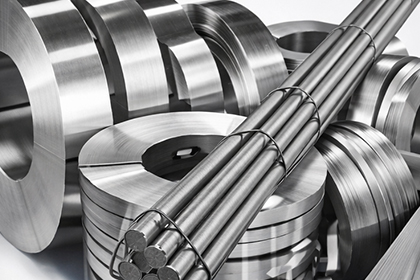
A Nickel-based superalloy primarily composed of Ni, with Cr (~15%), Fe (6-7%), and Ti (~2.5%). It maintains stable mechanical properties—such as tensile strength and yield strength—at temperatures up to 600°C. Due to its superior heat and corrosion resistance in organic and salt environments, it is essential for jet engines, nuclear reactor components, and high-temperature industrial furnaces.
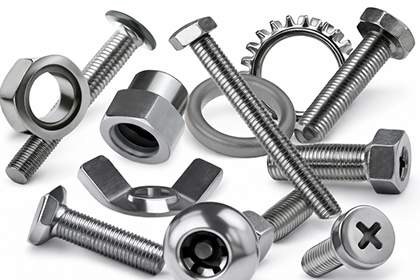
A Nickel-Copper alloy (60-70% Ni, 26-34% Cu) designed to enhance the corrosion resistance of nickel. It offers greater toughness and corrosion resistance than standard steel. Available in R-type (enhanced machinability) and K-type (precipitation-strengthened with Al and Ti), it is commonly used for marine plants, ship components, and high-corrosion fasteners.
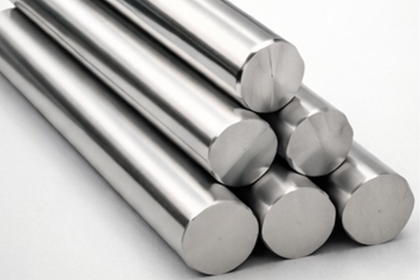
A high-performance Nickel alloy containing Molybdenum (~30%) and Iron (~5%). It exhibits exceptional resistance to severe environments, including nitric acid, chlorine gas, hydrogen chloride, and sulfuric acid. Known for its excellent workability and weldability, it is a primary material for chemical processing equipment where extreme corrosion resistance is mandatory.
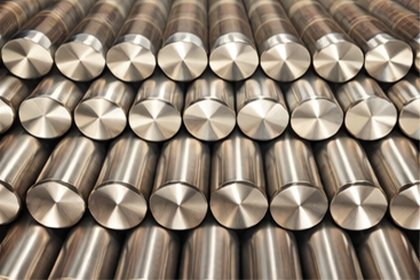
A silver-white metal known for its high strength-to-weight ratio and excellent ductility. It maintains stable mechanical properties below 400°C due to its low thermal conductivity and expansion rates. With outstanding resistance to seawater, it is widely applied in maritime structures, aerospace components, and high-strength chemical vessels.
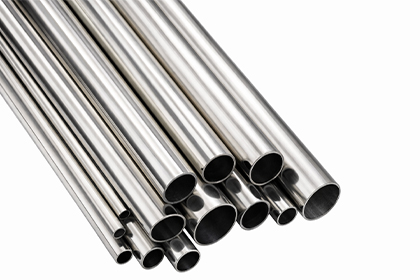
A lustrous silver-white metal with excellent malleability and polishability. It is more stable than iron against air and moisture and shows superior resistance in alkaline environments. It is a key material for electrical/telecommunication devices, vacuum tube components, and serves as a fundamental base for various magnetic and heating alloys.
Coating refers to the process of applying a layer of material over a surface to protect it from the external environment or to impart functional properties that the substrate itself lacks, such as moisture resistance, thermal bonding, oil resistance, corrosion resistance, and gas barrier properties.
Metal Coating is a process used to prevent corrosion and improve the surface tone and luster. This is achieved by depositing thin films onto metal or polymer surfaces or by forming metal oxides to alter surface properties—a field collectively known as Metal Finishing.
The most common method of metal finishing is electroplating, with examples including gold or silver plating on accessories, chrome plating on brass, or tin plating on steel to produce tinplate. Furthermore, beyond metal-on-metal applications, coating polymer resins or ceramic materials onto metal surfaces to provide specialized functions is a widely utilized process across various industrial sectors.
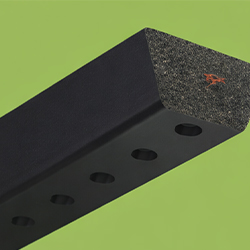
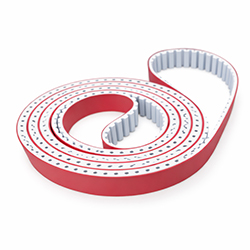
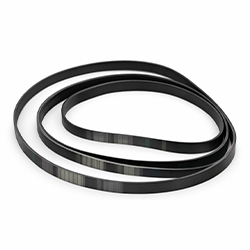
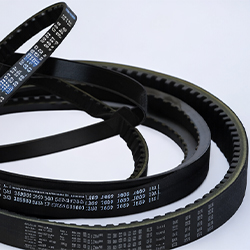
A Belt is a mechanical element that transmits power via friction by being looped over pulleys mounted on two separate shafts. It is primarily used when there is a significant distance between shafts or when gears and friction wheels are difficult to apply. Widely used for rotational power transmission and speed variation, belts are classified into Flat Belts and V-Belts based on their cross-sectional shape.
Belts are essential components in power transmission systems across nearly all industries, including heavy industries, chemical engineering, and light manufacturing. They are integrated into diverse equipment such as automobiles, electrical appliances, marine vessels, and agricultural machinery. Recent advancements in synthetic rubber and fiber reinforcement have significantly enhanced their heat resistance, oil resistance, wear resistance, and flexibility, leading to improved performance and expanding their range of applications.
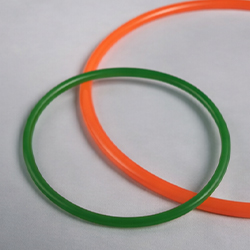
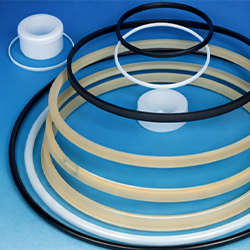
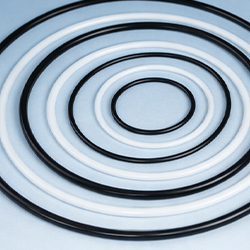
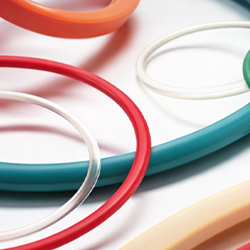
An O-Ring is a circular cross-section gasket (elastomer) made of synthetic or natural rubber and resins. It serves as a sealing device for rotating parts or connection points where airtightness/watertightness is required. When seated in a groove, it performs leak prevention and compression sealing functions.
O-Rings are manufactured from a wide variety of materials to suit specific operating environments, including Natural Rubber, NBR (Nitrile), Silicone, FKM (Viton/Fluorine), Acrylic, Butyl, Chlorinated Rubber, and Urethane. Renowned for their simple structure and high reliability, O-Rings are used in everything from waterproof underwater cameras to high-tech applications in aerospace and automotive industries.
A Motor is a device that converts electrical energy into mechanical energy and serves as the 'heart' of various machinery. By simply connecting a power source, it generates rotational force, making it an essential component for household appliances, industrial machinery, and production line automation.
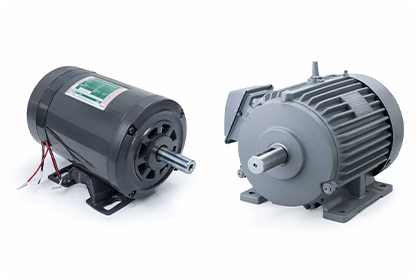
Single-phase power is the standard commercial power used in homes and offices. Since it cannot generate a rotating magnetic field on its own, a capacitor (condenser) is connected to the auxiliary winding to initiate rotation. Its advantage lies in its simplicity, requiring no complex infrastructure beyond the standard power outlet, making it ideal for office equipment and domestic appliances.
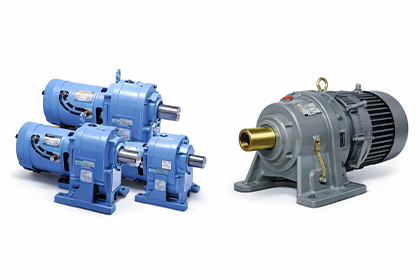
Three-phase motors operate using three power sources with a 120℃ phase difference. This configuration naturally generates a rotating magnetic field, allowing for easy startup without auxiliary devices. They offer high efficiency and significant starting torque. As they provide stable power without the need for capacitors, they are the standard for fixed industrial equipment.
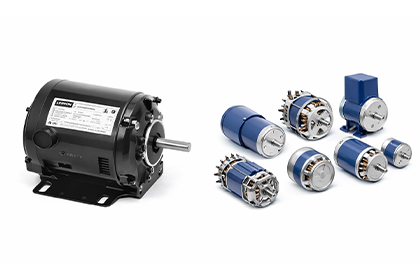
Powered by alternating current, AC motors are the most widely used motors in daily life and industry. They consist of a Stator and a Rotor. When AC current is supplied to the stator, it creates a shifting magnetic field that induces current in the rotor, generating torque. They are categorized into induction, synchronous, and commutator motors, with capacities ranging from small-scale Watts to large-scale Kilowatts.
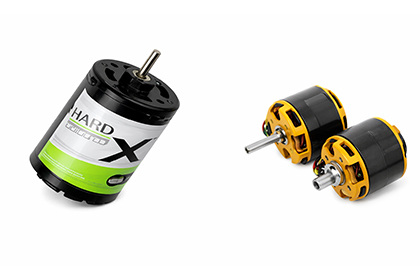
DC motors typically use permanent magnets in the stator and coils in the rotor (armature). Rotational force is generated by the attraction and repulsion of magnetic fields created by switching the current direction in the armature. They offer excellent speed and direction control, making them ideal for precise control applications and small driving devices.
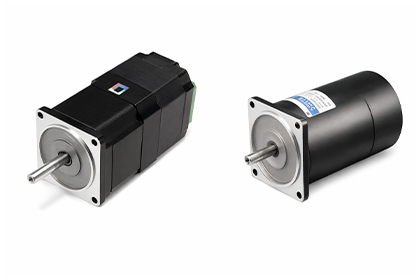
The BLDC Motor combines the longevity and low-noise advantages of AC motors with the compact, high-output characteristics of DC motors. By removing the brushes and using an electronic driver for control, it eliminates friction and wear. This results in a longer lifespan, lower noise, and high power density. BLDC motors are extensively used in automotive, aerospace, medical devices, and laboratory automation.




Customer Support
042-931-6100A/S
042-602-8018


ⓒ Ilshinautoclave 2025, All RIGHTS RESERVED
